normal end tidal co2 uk
L Barbado A Lledo J. It is the standard of care during certain procedures such as intubations and sedations and can be used in variety of clinical situations.

Average Etco2 Kpa During Cpr In Patients With Or Without Rosc Download Scientific Diagram
EtCO 2 35 mmHg in the presence of a normal respiratory rate and otherwise normal pulse and blood pressure may indicate that ventilation is occurring but.
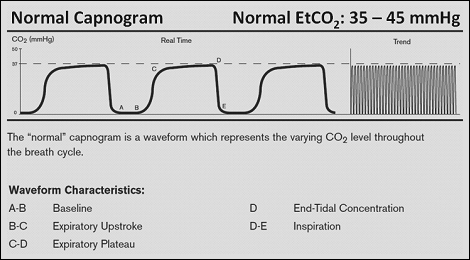
. Capnography is the measurement and numerical display of end-tidal carbon dioxide also known as EtCO 2. Whilst this is technically correct particularly in a small child with a leak around a. Or partial pressure of carbon dioxide measured somewhere near the mouth at the end of a normal exhalation hence end tidal end of tidal volume breath To get a measurement the following systems need to be functioning.
End-tidal carbon dioxide monitoring or capnography End-tidal carbon dioxide EtCO 2 monitoring is an attractive method as it is non-invasive portable and relatively inexpensive. As the patients breath reaches its end we come to the end tidal point and this is the value that will be displayed alongside the capnograph. So the short answer is you are right about the ranges 35-45 but that is for actual PaCo2 drawn from an ABG.
End-tidal CO2 ETCO2 monitoring is not a new modality in the pediatric emergency department PED and emergency department. It stands for Proper Quantity Rate Shape and Trend. As stated before end tidal is slightly different.
If the tidal volume does not change but the respiration rate increases. The difference between nend-tidal and arterial CO 2 is increased if there is mismatch of ventilation and perfusion within the lung as occurs in lung disease. End-tidal carbon dioxide ETCO 2 is the level of carbon dioxide that is released at the end of an exhaled breath.
If you want to go from mmHg to Kpa then divide the value by 75. ETCO 2 levels reflect the adequacy with which carbon dioxide CO 2 is carried in the blood back to the lungs and exhaled. Range between 35 and 40 mmHg or 40 57 kPa Respiratory Rate.
Capnography can be used to measure end-tidal CO 2. On page 49 of the European Paediatric Advanced Life Support manual EPALS 4th edition there is a statement regarding end-tidal carbon dioxide ETCO 2 traces during CPR which states The absence of exhaled CO 2 during CPR does not guarantee tube misplacement. Circulation cardiac output to carry that CO2 to the lungs in blood.
However ETCO2 may be underused in the PED setting. Since problems with lungs are not common and gas exchange between alveoli and the blood is swift and effective alveolar CO 2 reflects arterial CO 2. Normal end-tidal PCO2 is approximately.
L Ojea R Fernandez-Rodriguez C. For a person with normal lungs the difference between end tidal and Paco2 can vary between 5-8mmHg depending on the book your reading. End tidal CO 2 monitoring is represented as a number and a graph on a monitor.
Understanding End Tidal CO 2 Monitoring. The graphical representation of the concentration or partial pressure of expired carbon dioxide during a respiratory cycle is shown in a waveform format and is known as a capnogram. For a person with normal lungs the difference between end tidal and Paco2 can vary between 5-8mmHg depending on the book your reading.
EtCO 2 is the maximum expired carbon dioxide concentration during a respiratory cycle. Range between 12 and 20 breaths per minute Capnogram Waveform shape. In conditions of normal breathing 6 Lmin 12 breathsmin 500 ml for tidal volume etCO 2 is very close to alveolar CO2.
Minute Volume L Tidal Volume L x Respiratory Rate BPM So an animal breathing in 12L 10 times a minute will have a minute volume of 12L. CO2 and adjusting ventilation parameters during anaesthesia. Hypoventilation and apnea precede hypoxia therefore end-tidal carbon dioxide should be affected before oxygen saturation.
The waveform is called capnograph and shows how much CO 2 is present at each. Metabolically active tissue to produce CO2. So the short answer is you are right about the ranges 35-45 but that is for actual PaCo2 drawn from an ABG.
The alpha angle is the transition from Phase II to Phase III. The beta angle is the transition from Phase III to Phase I the start of inspiration an additional phase IV terminal. Available evidence has established that ETCO 2 measurement can provide an indication of cardiac.
This is as the end tidal carbon dioxide level is measured. End Tidal CO2. In normal lungs the end-tidal CO 2 tension is 0508 kPa less than the arterial CO 2 tension and is a useful non-invasive estimate of arterial CO 2.
FOOTNOTECacho G Perez-Calle J. Minute Volume is the product of Tidal Volume and Respiratory rate. The number is called capnometry which is the partial pressure of CO 2 detected at the end of exhalation ranging between 35 - 45 mm Hg or 40 57 kPa.
The technique has been End-tidal carbon dioxide monitoring in neonates Carbon dioxide monitoring is vital in the management of ventilated newborn babies. 38 mmHg or 5. Duckworth 2017 suggests the acronym PQRST when assessing the ETCO2 waveform.
Normal end tidal co2 values. This value can be displayed in Kilopascals Kpa or millimetres of mercury mmHg. Capnography is superior to pulse oximetry for the detection of respiratory depression during colonoscopy.
Current guidance recommends an end- tidal carbon dioxide ETCO2 of 4045 kPa 300 338 mm Hg to achieve a low- normal arterial partial pressure.
Capnogram R Series Defibrillator Zoll Medical Uk

Emma Capnograph Medacx
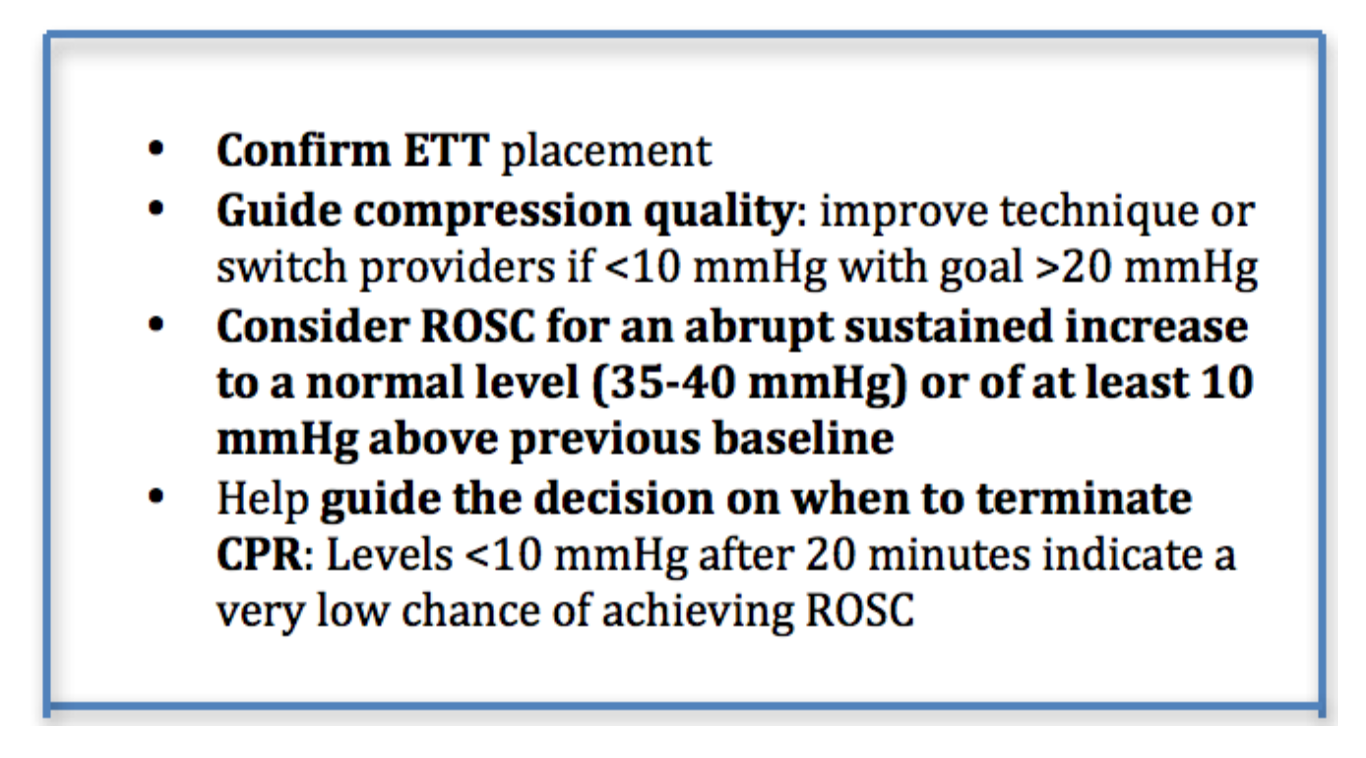
Emdocs Net Emergency Medicine Educationcapnography In The Ed Emdocs Net Emergency Medicine Education

How To Read And Interpret End Tidal Capnography Waveforms Emsuk Learning
2

Microstream Capnography

Potential Applications Of Capnography In The Prehospital Setting Journal Of Paramedic Practice

Pdf Applications Of End Tidal Carbon Dioxide Etco2 Monitoring In Emergency Department A Narrative Review Semantic Scholar

Capnography Ii What Happened To The Alfaxan Anaesthetic Injection

Average Etco2 Kpa During Cpr In Patients With Or Without Rosc Download Scientific Diagram
2
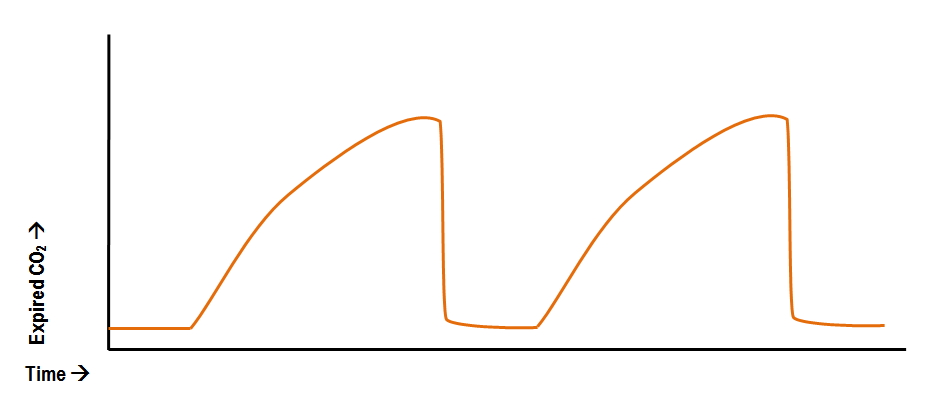
Abnormal Capnography Waveforms And Their Interpretation Deranged Physiology

How To Read And Interpret End Tidal Capnography Waveforms Emsuk Learning

Potential Applications Of Capnography In The Prehospital Setting Journal Of Paramedic Practice

Sar Helicopter Paramedic Practice Etco2 Measuring To Assist With Cpr Attempts Journal Of Paramedic Practice
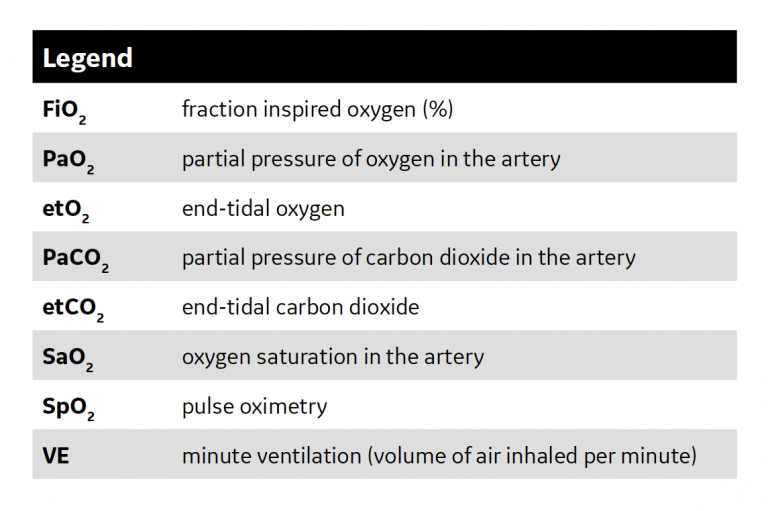
End Tidal Oxygen Measurement White Paper Clinical View

End Tidal Co2 Monitoring In The Pre Hospital Environment More Than Just Endotracheal Tube Placement Confirmation Journal Of Paramedic Practice

How To Read And Interpret End Tidal Capnography Waveforms Emsuk Learning

3 Waveform Capnography Showing Changes In The End Tidal Carbon Dioxide Download Scientific Diagram